
Kanda Poha
A light, savoury Maharashtrian breakfast that’s all about texture, balance and quiet perfection

Hello again,
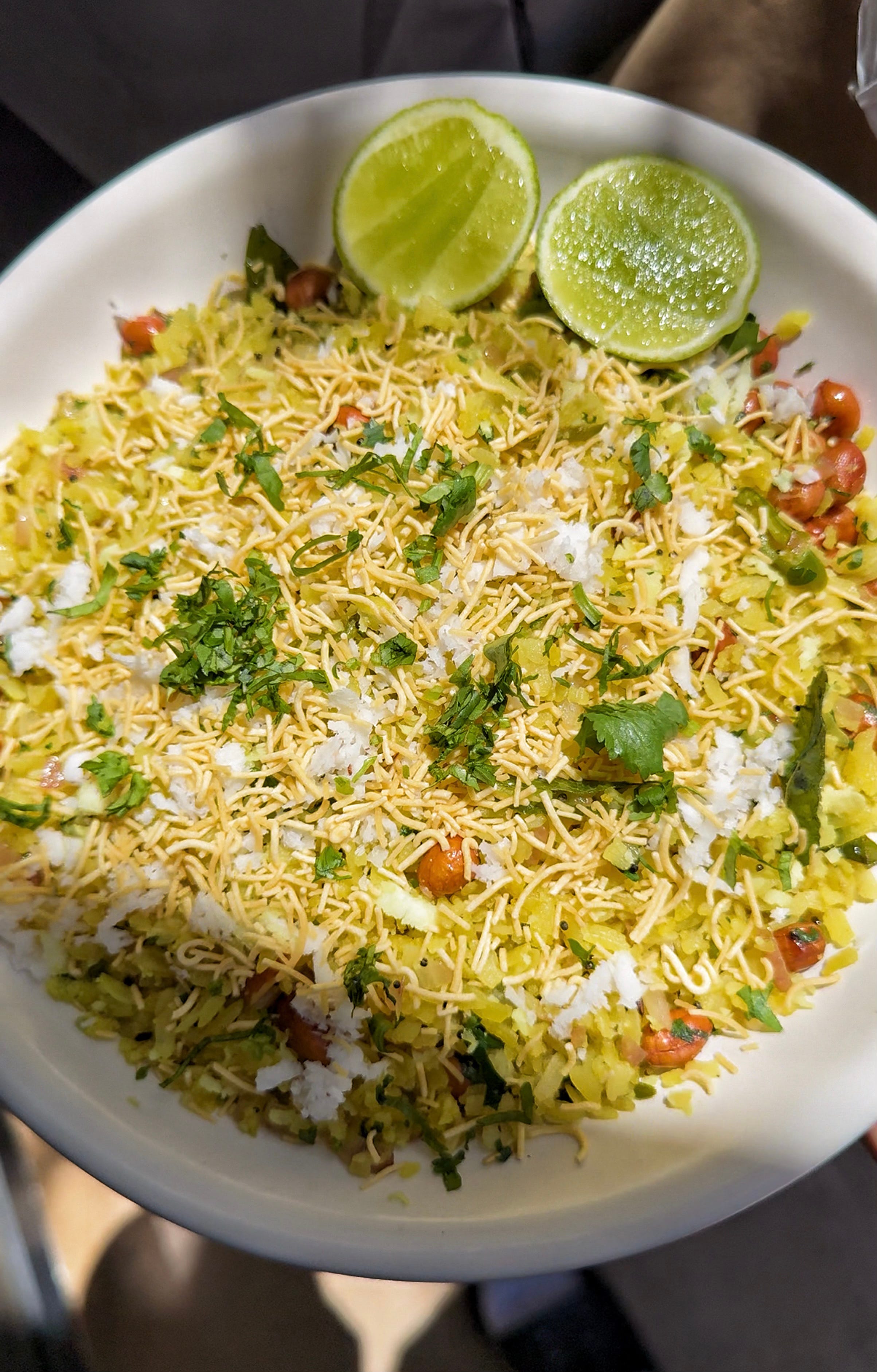
If you’ve never had poha before, you’re in for something special. It’s one of those dishes that looks humble on the plate — soft, steamed flakes of rice, a scattering of peanuts, a few curry leaves here and there — but delivers something quietly perfect. Light but deeply satisfying. Familiar but full of small surprises.
Poha is honestly one of my favourite Indian dishes. It has everything I want in a meal. There’s texture from the toasted peanuts and fresh coconut, a gentle warmth from green chilli, sweetness from just a pinch of sugar, and that final squeeze of lime that pulls it all together.
One of my fondest memories of eating it was in Mumbai, back in October 2024. I was there filming content with a crew, and somewhere in between shoots, the two cameramen found out just how obsessed I was with poha. The next morning, they both showed up grinning, each holding a container of poha made by their mothers.
They were completely different. One was almost exactly like the version I’m sharing today — onions, curry leaves, peanuts, fresh coriander, the works. The other was stripped back to its bare bones. No onion, no coconut, no curry leaves. Just poha, turmeric, mustard seeds and salt. And yet both were brilliant. Both had their own rhythm, their own balance. Both tasted like home, even though it wasn’t mine.
That’s the beauty of poha. It bends easily to your preferences, to your pantry. You can leave things out, add extras, keep it simple or go deep. The only thing I’ll say is non-negotiable is the lime. You need that hit of acid at the end. It makes everything come alive.
Let’s cook.
The Foundation: Poha
Poha is flattened rice. You’ll find it in most Indian grocery stores, and it comes in a few different thicknesses. For this, medium poha works best. Too thin and it goes mushy, too thick and it feels dense. The trick is washing it just enough to soften without letting it collapse. I use a sieve under cold running water, give it a 10-second rinse, then let it sit and absorb what it needs for about 10 to 15 minutes. You want the flakes softened but still holding shape.
Peanuts, Coconut and Contrast
Texture is everything in Kanda Poha. You want bites that feel alive. We start by frying whole peanuts in oil until golden and crisp, they go in early so they soak up some of the warmth, but we hold a few back for crunch at the end.
Freshly grated coconut gets mixed through near the end too, adding that cool, creamy edge. If you can’t find fresh, frozen is a good backup, just thaw and pat dry. Don’t use desiccated, it won’t have the same effect.
Tempering Spices, Building Flavour
The oil is your carrier here. Once hot, mustard seeds go in first. Let them crackle and pop, that’s when they’ve released their punchy aroma. Cumin follows closely, then we drop the heat and layer in hing (asafoetida), sliced green chillies, and fresh curry leaves. That’s your base. These flavours infuse the oil and coat everything that follows.
Next comes the finely chopped onion. Pink onions best if you can find them. Fry them gently for a few minutes until they’re soft and translucent. You’re not looking for colour, just sweetness and that gentle allium base. Then turmeric - just a pinch, and only for a few seconds. It wakes up fast and you don’t want it to catch.
The Mix and The Steam
Now the washed poha goes in. Fold it through the onion-spice mixture gently. Then add the fried peanuts, sugar (yes, sugar — it lifts the whole thing), salt, fresh coriander, and the coconut. A splash of water helps everything bind and gently steams the poha.
Put the lid on and let it sit for two minutes. No stirring, no peeking. This is when all the flavours come together and the texture sets up just right.
To Finish and Serve
When you lift the lid, everything should be warm, lightly fluffy, and deeply aromatic. Spoon into bowls, then top with more fresh coconut, coriander, sev, and a generous squeeze of lime. If you’re eating this for breakfast, you’ve got the rest of the day covered. If you’re making it for lunch or dinner, maybe just double the batch.
Kanda Poha
Serves 3–4
Ingredients
300g medium poha
80g skin-on peanuts
80g fresh grated coconut
1 tsp mustard seeds
1 tsp cumin seeds
Pinch of hing
2–3 tbsp peanut oil
1–2 green chillies, finely sliced
5–8 curry leaves
1 medium pink onion, finely chopped
1/4 tsp turmeric powder
1 tsp sugar
Handful of fresh coriander, chopped
Sev, for garnish
1 lime
Salt to taste
Method
Rinse the poha under cold running water for 10 seconds. Leave to sit in a sieve for 10–15 minutes until softened.
Heat a small amount of peanut oil in a pan and fry the peanuts until golden. Set aside.
Add 2–3 tablespoons more oil to the pan. Once hot, add the mustard seeds. Let them pop.
Add cumin seeds, reduce the heat, then stir in the hing, chillies, and curry leaves.
Add chopped onion and cook gently for 4–5 minutes until soft.
Add turmeric, cook for 5 seconds, then add the softened poha.
Fold in the peanuts, coconut, sugar, salt, coriander, and a splash of water.
Mix briefly, then cover and steam with the lid on for 2 minutes.
Serve topped with extra coconut, sev, coriander, and lime juice.